 Trim My Crib™
Backlighting
Backlighting a media wall: the glow that makes movie night
Why the glow steals the show
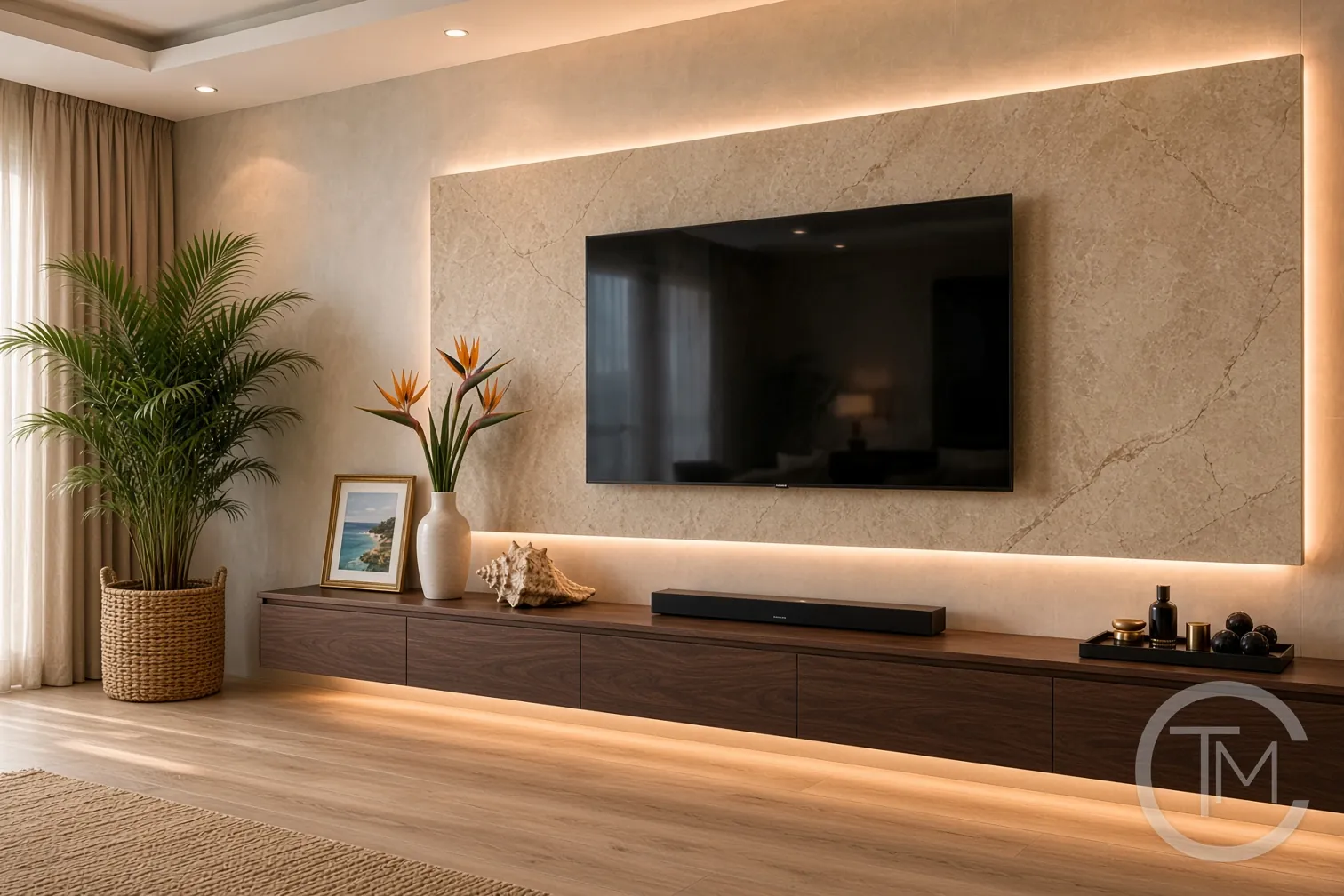
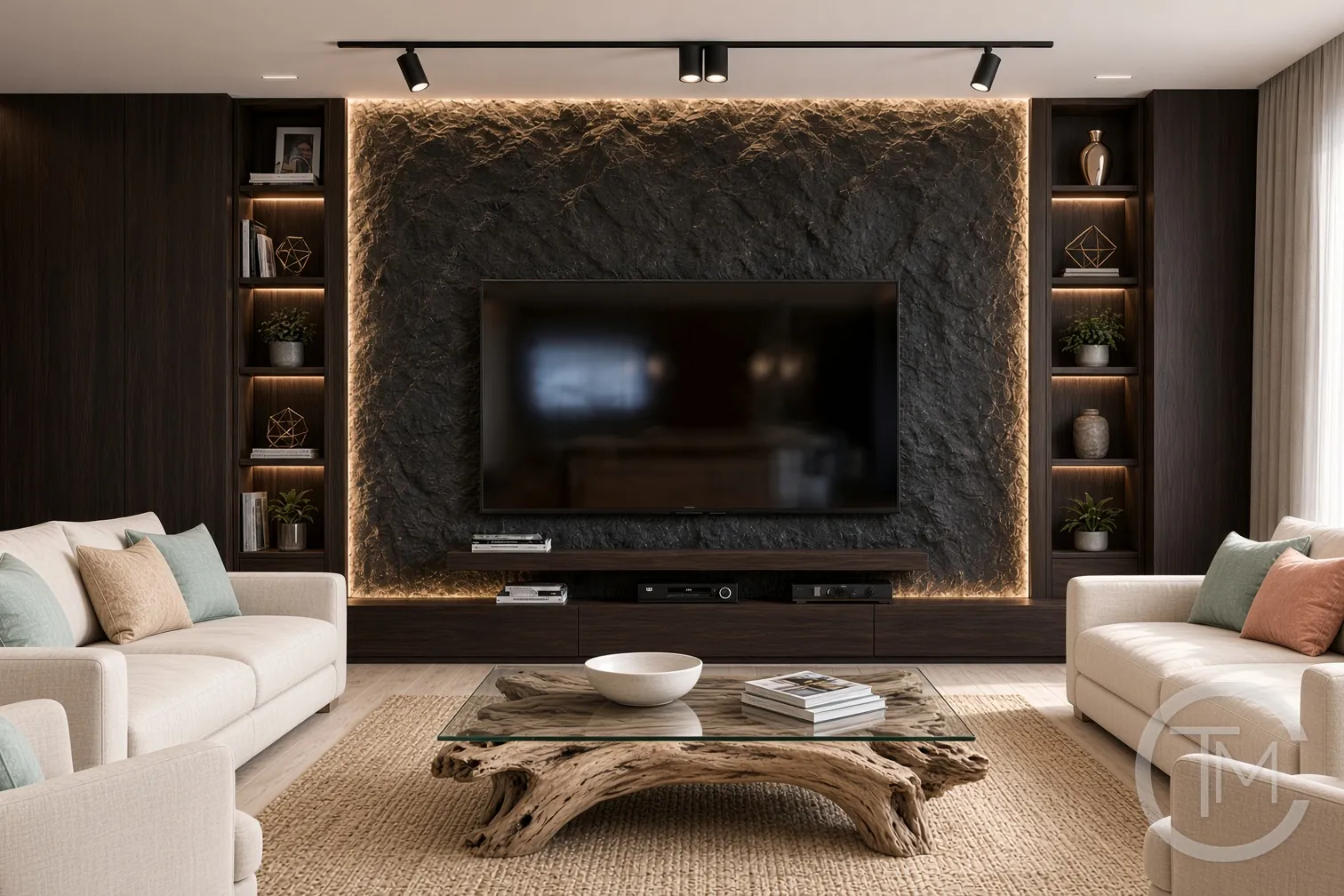
By day, a media wall is woodwork and paint. After sunset, the lighting gives it a second personality. Thin LED strips hidden along shelf edges, inside niches and behind a floating panel wash the wall in soft light, so the screen sits inside a frame of glow instead of a dark rectangle. It is the detail guests notice first and the one homeowners say they use every single night.
Warm glow or cool glow?
Color temperature is measured in kelvins. Lower numbers glow amber, higher numbers look whiter and a little blue. There is no wrong answer, only the mood you want when the lights go down.
| Glow | About | The feel | Lovely with |
|---|---|---|---|
| Candlelight amber | 2200K–2500K | Cozy, lounge-like, very relaxed | Walnut, dark stain, deep painted backdrops |
| Warm white | 2700K–3000K | Golden and flattering, the crowd favorite | White oak, honey tones, warm whites |
| Neutral white | 3500K–4000K | Clean and gallery-like | Bright painted built-ins, coastal palettes |
| Daylight | 5000K and up | Crisp, techy, high energy | Minimal panels, game rooms, cool grays |
| Tunable or color | Your pick | Changes with the moment | Bonus rooms, game day, holidays |
A designer trick: match the glow to the wood. Warm white pulls the red and gold out of walnut and stained oak, while neutral white keeps crisp painted shelves from looking yellow. If you cannot decide, tunable white lets you change your mind later. The Department of Energy lists dimming and color control among the natural strengths of LED lighting2.
The halo behind the TV
A strip around the back of the screen, or around the edge of a floating panel, throws a soft frame of light onto the wall. Home theater folks call it bias lighting. It softens the jump between a bright picture and a dark room, makes blacks look richer and turns the screen into a floating window. For the most accurate picture, pick a neutral white close to the screen’s own white point, often listed as 6500K. For pure mood, warm wins.
Floating shelves that glow
A shallow groove routed into the underside of each wood shelf hides the strip, and a frosted cover turns the dots into one smooth line. The light falls onto the shelf below and lights whatever sits there: a row of books, a coral piece, a family photo. Grain on stained shelves comes alive, and painted shelves get a gentle gradient that looks custom because it is.
Niches that look like a gallery
Lit niches on each side of the screen balance the wall and give you two little stages for display. Light from the top front edge of the niche reads best, washing down the back wall without glare. A dark painted niche with warm light is pure drama; a white niche with neutral light feels fresh and coastal.
Dimming and scenes for movie night
The best glow is the one you can tune. Put shelves, niches and the halo on their own dimmers or smart scenes, then save a few favorites.
- Party: everything up, so the wall becomes the room’s chandelier.
- Dinner: shelves at about half, halo off, a calm background for conversation.
- Game day: bright shelves and a team-color halo if your strips do color.
- Movie night: room lights off, shelves out, just a low halo behind the screen.
Quality LED products are expected to run 30,000 to 50,000 hours or longer, according to the Department of Energy2, so the glow you choose on day one should keep shining for years of movie nights.
Planning the glow
- Decide which edges will glow before the woodwork is built, so every strip and wire has a hidden path.
- Aim to see the glow, never the dots. Recessed grooves and frosted covers make the difference.
- Pick one color temperature for the whole wall, unless you want a deliberate contrast between the halo and the shelves.
- Put the controls where you sit. A wall dimmer by the sofa or a scene on your phone beats hunting for a switch.
Pairing the glow with the right screen size? See sizing a media wall to your room.
Sources
- U.S. Department of Energy, LED Basics. energy.gov